Victory over the need to win

Power, made answerable.

A study in mature ambition: can you create abundance, stop at ninety-nine, reconcile with a rival and finally release the role that made you important?

Build the remembrance

Read slowly enough
to remember under pressure.

Each image is one anchor in the sequence. Read the scene, close your eyes for a moment and reconstruct its final “remember” line. This visual retelling is a doorway and memory aid—not a replacement for the complete translations and purports, or a claim that viewing alone fulfills the passage’s practice.

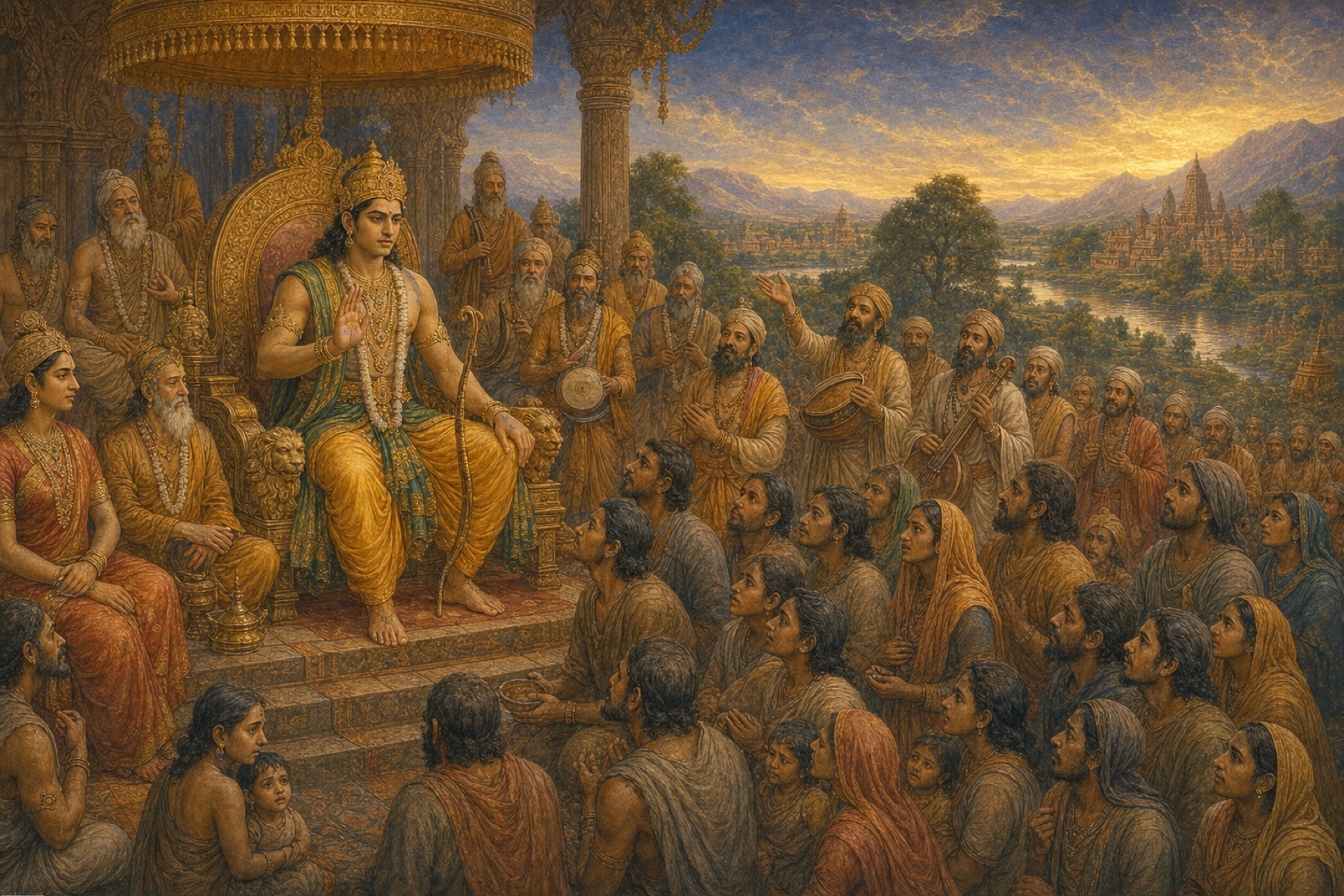
King Prthu stops the bards from praising qualities he has not yet demonstrated
Scene 01ŚB 4.15.1–4.16.27
01

ŚB 4.15.1–4.16.27

Authority before achievement

Pṛthu and Queen Arci appear after the ruinous rule of Vena, and the sages recognize Pṛthu as an empowered representative of the Lord. At his coronation, professional bards begin praising qualities that have not yet been demonstrated.

Pṛthu stops them. Let the praise come when the qualities actually manifest, he says. Chapter 16 then describes the standard his reign must fulfill. Authority begins not as a claim to admiration, but as a public obligation to become worthy of it.

Remember this frame

The new king raises one hand: praise the character only after the work proves it.
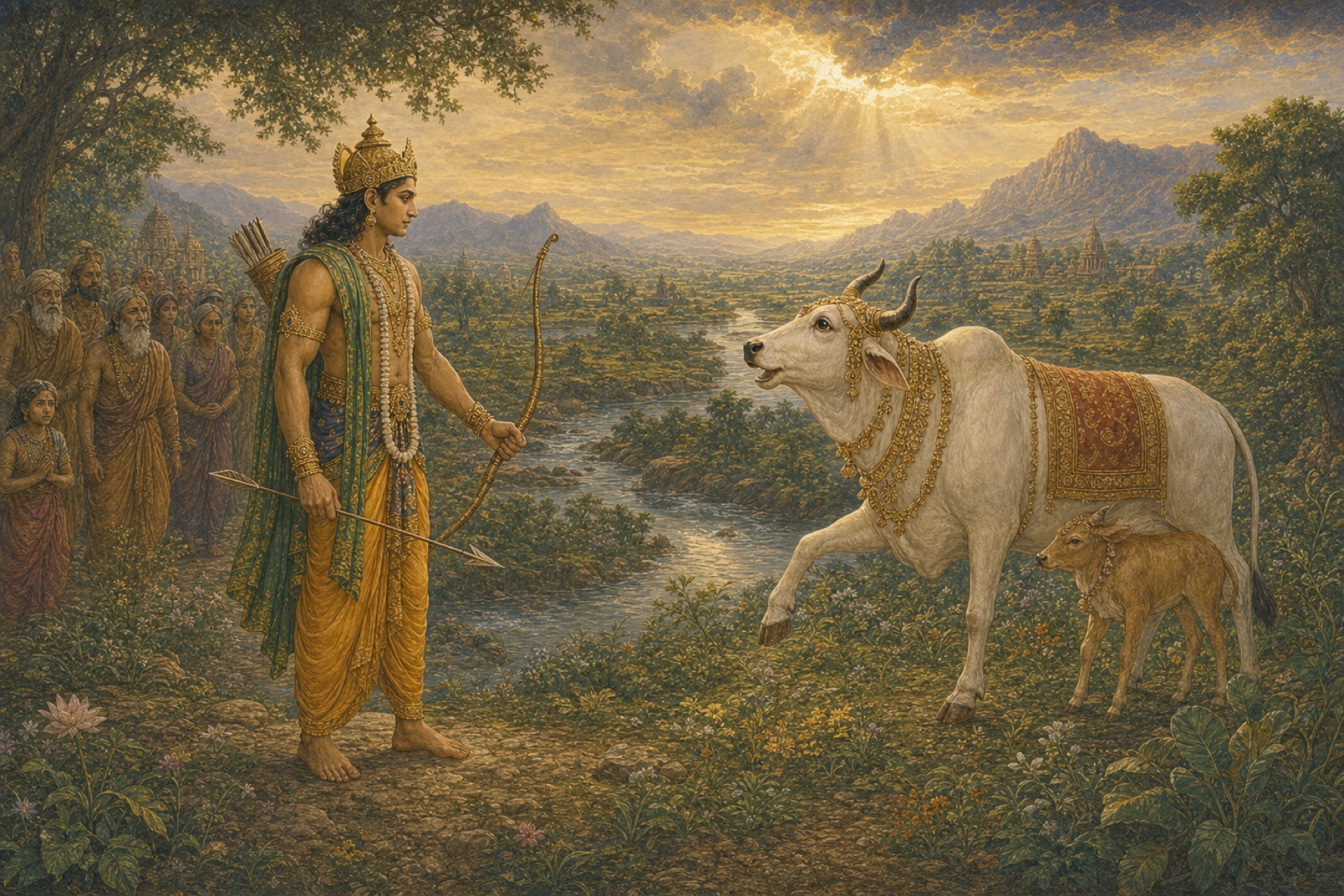
King Prthu pauses with lowered arrow as the Earth in cow form turns to speak
Scene 02ŚB 4.17.1–36
02

ŚB 4.17.1–36

When hungry citizens reach the throne

Soon after the coronation, citizens arrive thin from hunger. Pṛthu does not dismiss the crisis as inherited or outside his remit. He searches for the cause and learns that the Earth has withheld her produce after resources were misused.

He pursues the Earth in cow form, but the confrontation changes when she turns and speaks. The drawn bow pauses. The episode is not a license for violence against nature; it is the beginning of accountability on both sides.

Remember this frame

The ruler’s arrow lowers when the Earth begins to explain.

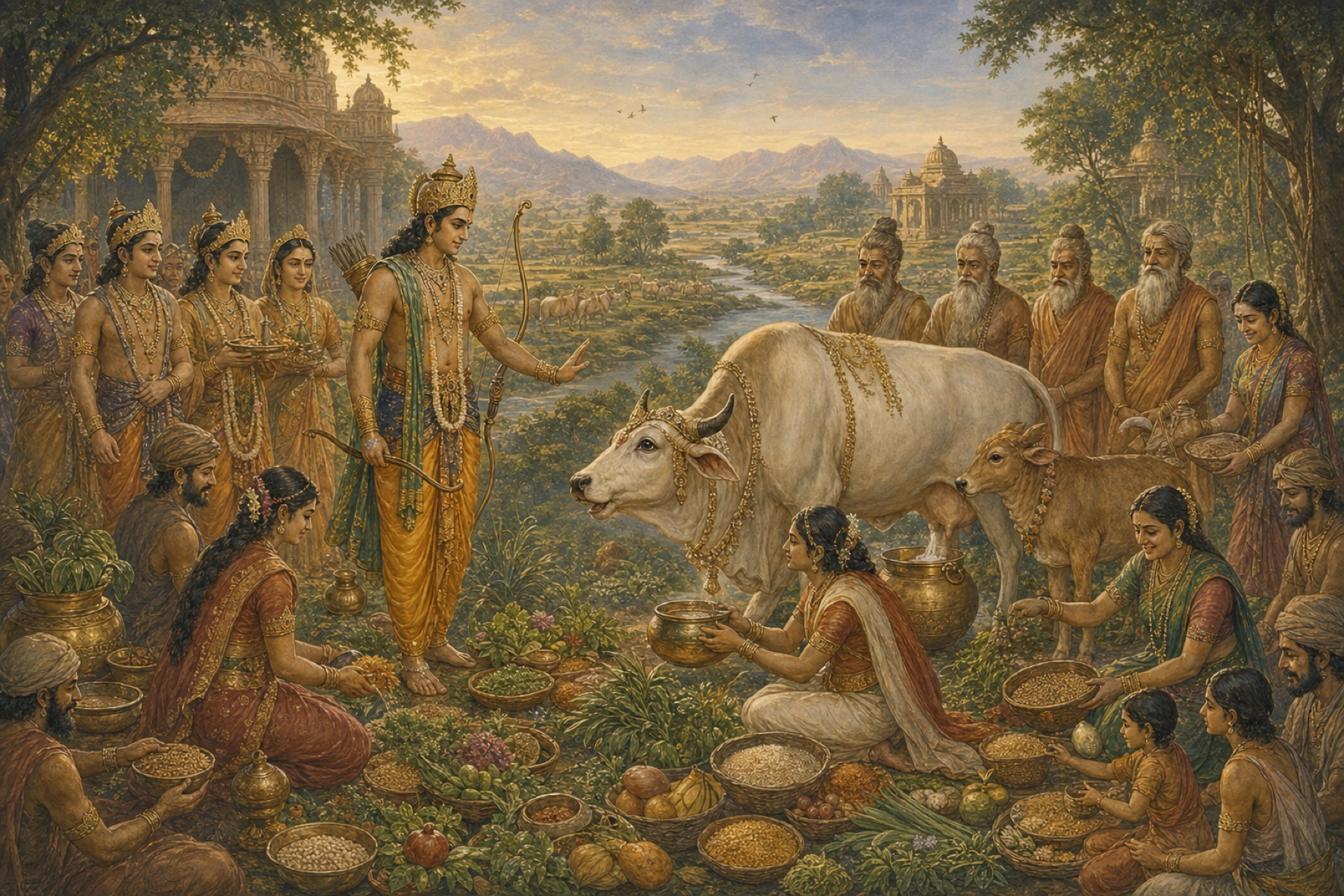
King Prthu honors the Earth in cow form as grains and herbs return for the citizens
Scene 03ŚB 4.18.1–32
03

ŚB 4.18.1–32

Abundance requires the right relationship

The Earth asks for a suitable calf, vessel and milkman. With the relationship properly arranged, grains and herbs return. Other communities receive provisions according to their respective natures, and Pṛthu accepts the Earth as his daughter.

He also levels rough ground and organizes settlements, villages and pasturing places. Prosperity here is neither magic nor extraction alone; it follows protection, structure and reciprocity.

Remember this frame

A calf, a vessel and protected Earth turn scarcity into nourishment.

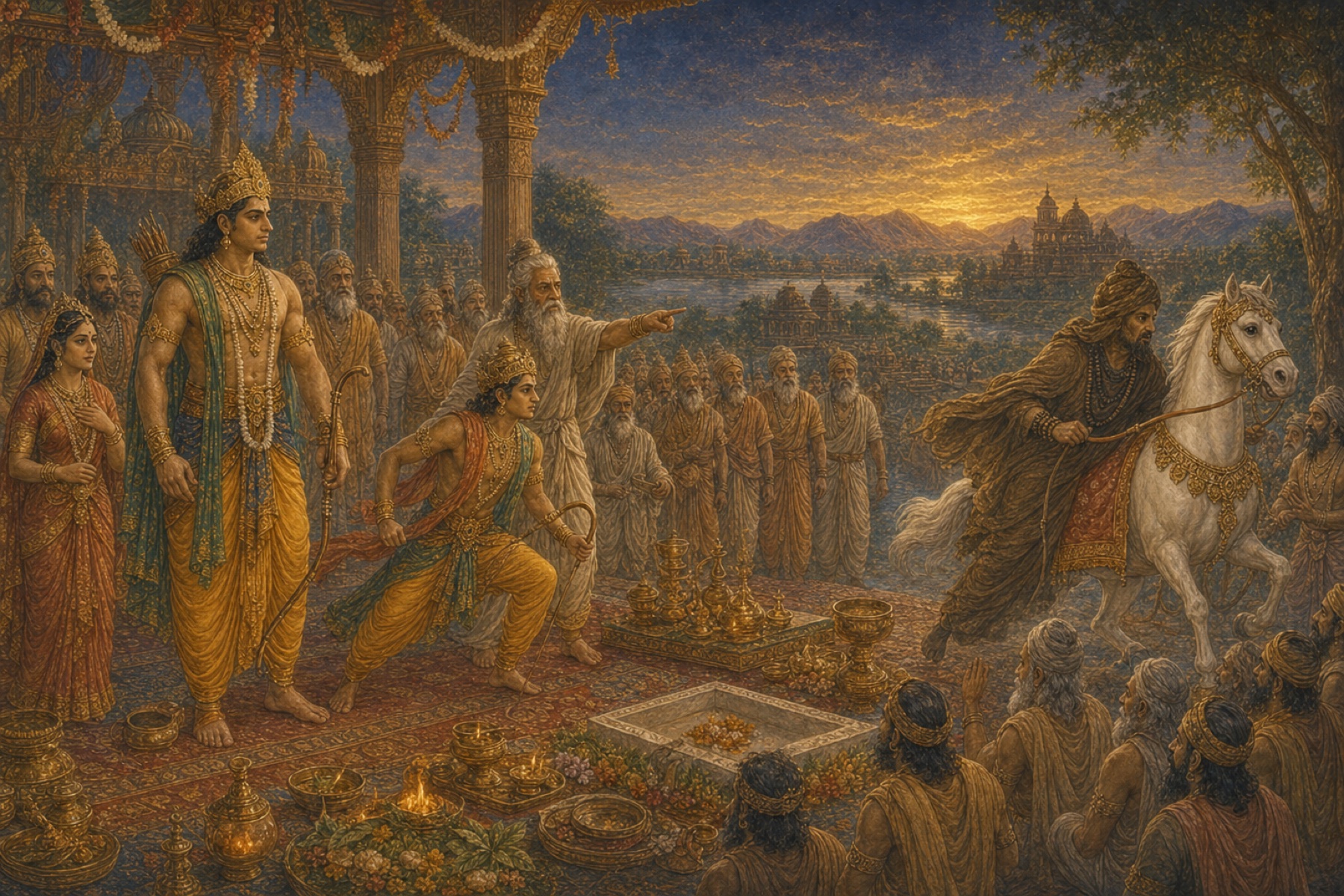
Indra steals the sacrificial horse in a deceptive disguise while sage Atri alerts Prthu's son
Scene 04ŚB 4.19.1–42
04

ŚB 4.19.1–42

Why ninety-nine was enough

As Pṛthu approaches his hundredth horse sacrifice, Indra becomes envious. He steals the sacrificial horse while wearing deceptive imitations of spiritual dress, and the pursuit begins to generate more conflict and false practice.

Brahmā asks Pṛthu to stop at ninety-nine. A person who understands liberation has no need to let one final achievement define him. The unfinished number becomes more instructive than the trophy would have been.

Remember this frame

The horse disappears; the place for the hundredth achievement remains deliberately empty.

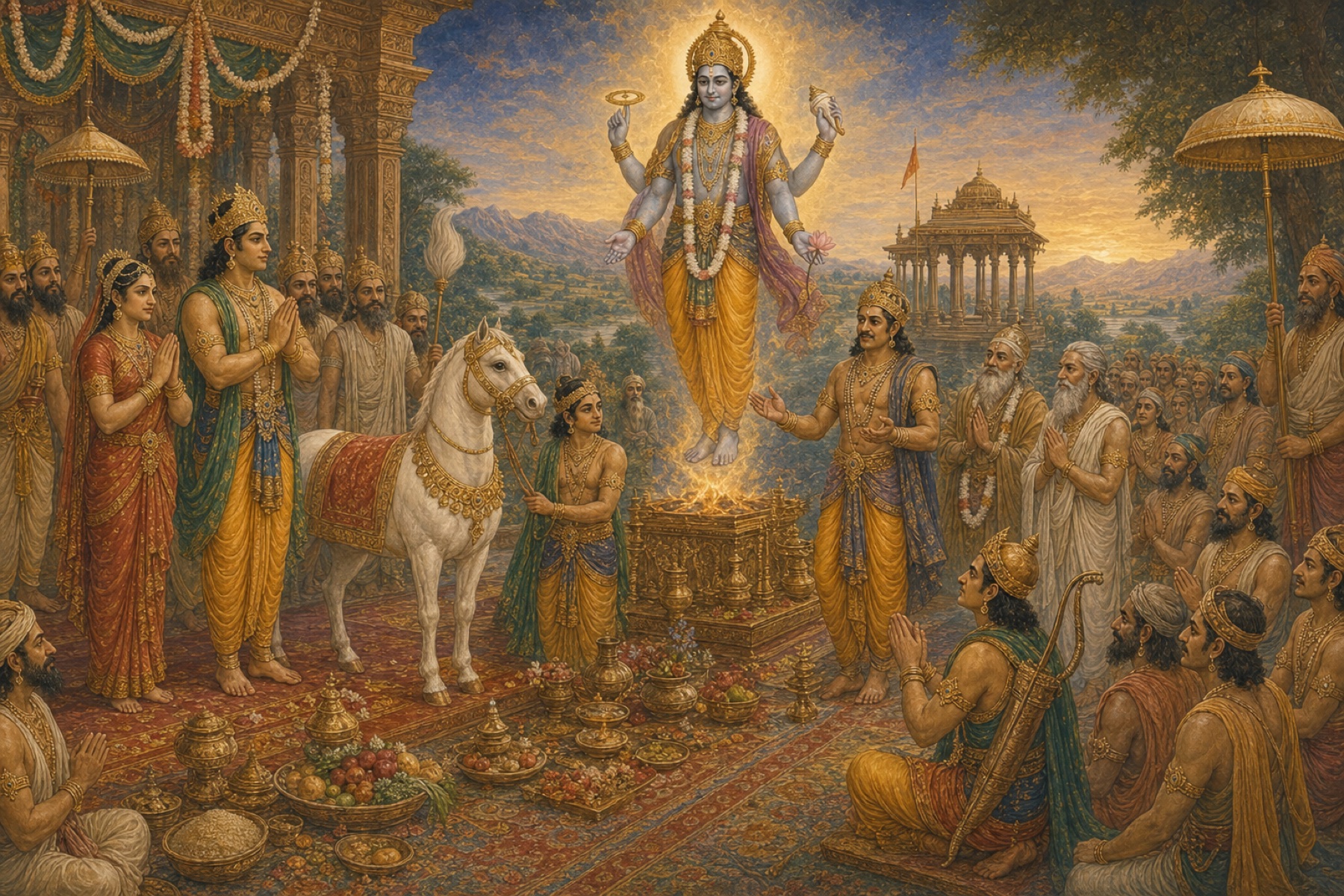
Lord Vishnu reconciles King Prthu and Indra at the horse sacrifice
Scene 05ŚB 4.20.1–38
05

ŚB 4.20.1–38

Victory over resentment

Lord Viṣṇu arrives with the ashamed Indra and instructs Pṛthu to remain equipoised while carrying out his duty. Indra bows; Pṛthu immediately embraces him and abandons the resentment created by the stolen horse.

When Viṣṇu offers a boon, Pṛthu does not ask to recover the missing milestone. He asks for countless ears with which to hear the Lord’s glories—an image of appetite redirected from recognition toward truth.

Remember this frame

The former rivals embrace; the number one hundred loses its power.

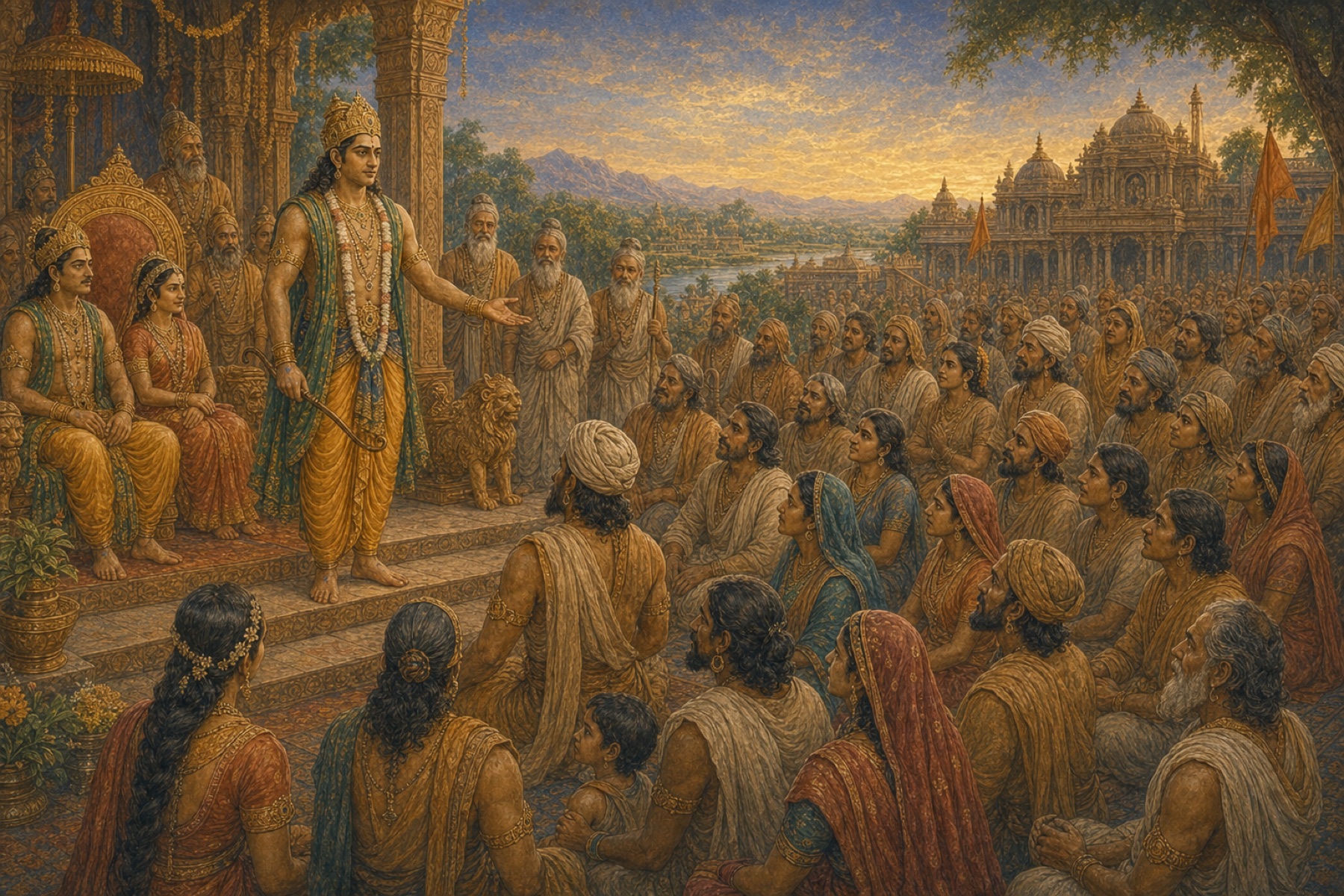
King Prthu addresses citizens about protection, duty and the spiritual purpose of work
Scene 06ŚB 4.21.1–52
06

ŚB 4.21.1–52

A public charter for accountable power

Pṛthu returns to his capital and addresses citizens, priests and leaders. His speech connects authority to protection, taxation to responsibility and daily work to an ultimate spiritual purpose. The ruler is answerable for helping people remember the destination of life.

This is ancient kingship, not a modern political platform. Its transferable challenge is sharper: if your position gives you influence over others, what good are you responsible for making possible?

Remember this frame

The scepter points downward; authority answers to the people it protects.

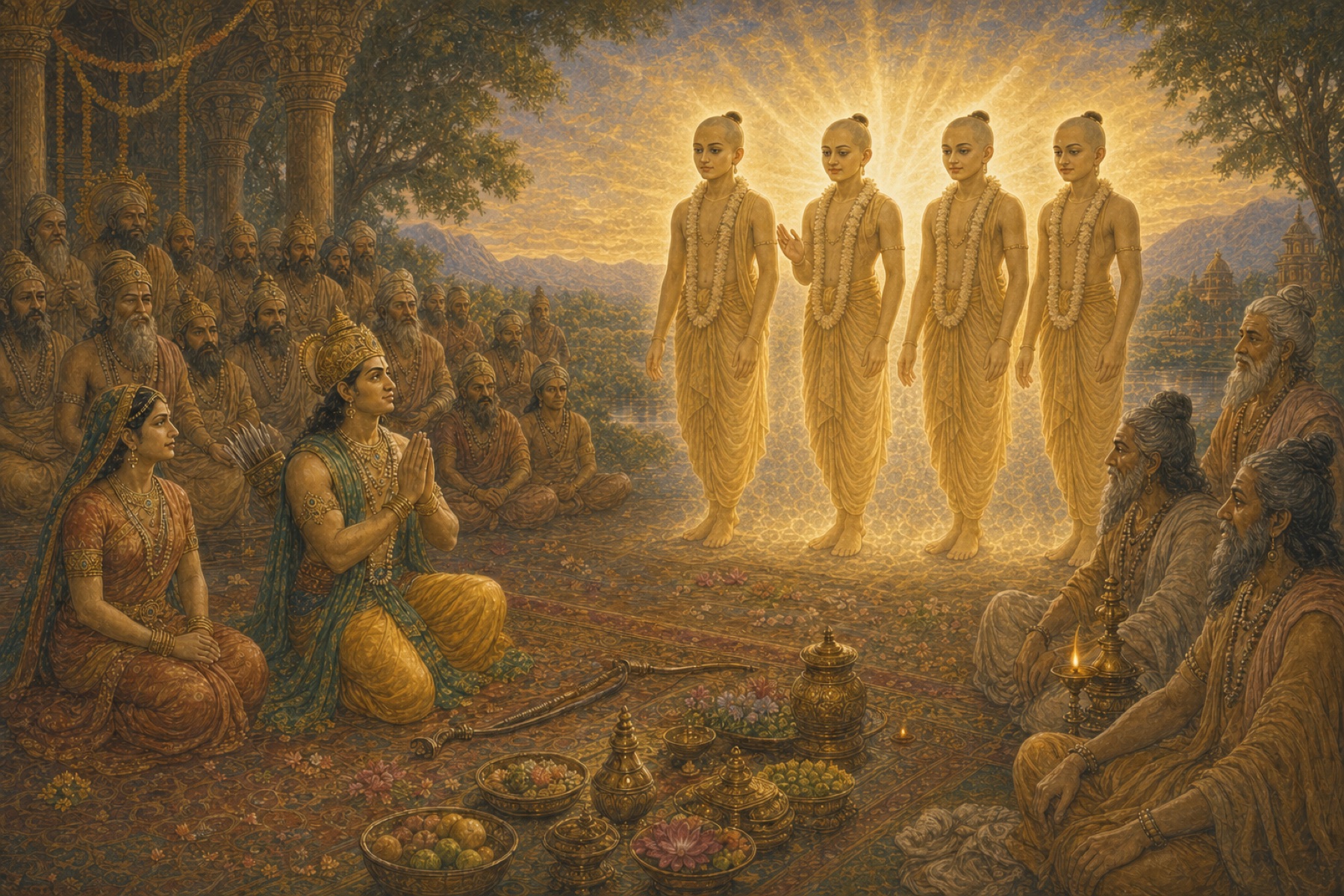
King Prthu sits respectfully below the four radiant Kumaras and asks about the highest human good
Scene 07ŚB 4.22.1–63
07

ŚB 4.22.1–63

The question ambition cannot answer

The four Kumāras arrive looking eternally youthful but carrying ancient realization. Pṛthu leaves his throne, receives them with reverence and asks how a person entangled in material life can quickly attain the highest good.

Sanat-kumāra answers with hearing, devotion, detachment from bodily identity and attraction to the Supreme Lord. The accomplished ruler becomes a student precisely where accomplishment has no final answer.

Remember this frame

A world ruler sits below four youthful sages and asks what success cannot supply.

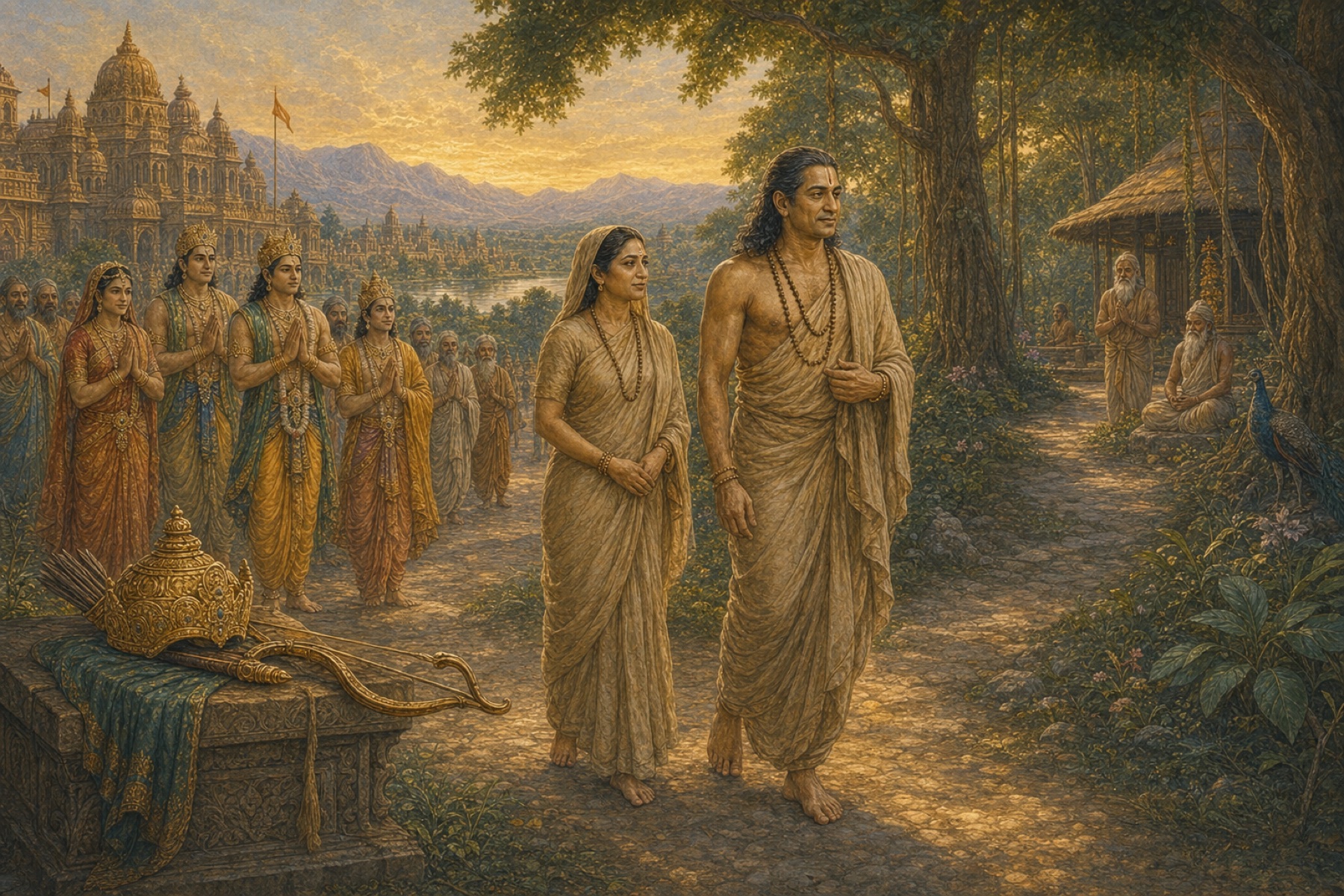
An older Prthu leaves his crown and bow behind and enters the forest with Queen Arci
Scene 08ŚB 4.23.1–39
08

ŚB 4.23.1–39

The crown placed down

When old age arrives, Pṛthu distributes responsibility and resources, entrusts the kingdom to his sons and leaves with Queen Arci for the forest. He deepens his spiritual practice and gives up the body with his consciousness fixed on the Lord.

The chapter then gives its benedictions. Faithful hearing is praised for devotion and many forms of auspiciousness. The victory promise in 4.23.36, however, is specifically addressed to a king who chants the narration three times before departing in his chariot—not a blanket guarantee of corporate success.

Remember this frame

The crown and bow remain at the threshold; the ruler walks on without them.

Carry the victory forward

Let leadership end in service, not self-display.

ŚB 4.23.36 does name victory and ruling power, but speaks specifically to a king who chants the narration three times before setting out in his chariot. This guide does not turn that royal condition into a corporate guarantee. Read Chapters 15–23 for all eight movements and the benedictions in their original setting.