Victory over fear

The child fear could not move.

A study in inner victory: can your center hold when education, incentives, authority and fear all demand a different answer?

Build the remembrance

Read slowly enough
to remember under pressure.

Each image is one anchor in the sequence. Read the scene, close your eyes for a moment and reconstruct its final “remember” line. This visual retelling is a doorway and memory aid—not a replacement for the complete translations and purports, or a claim that viewing alone fulfills the passage’s practice.

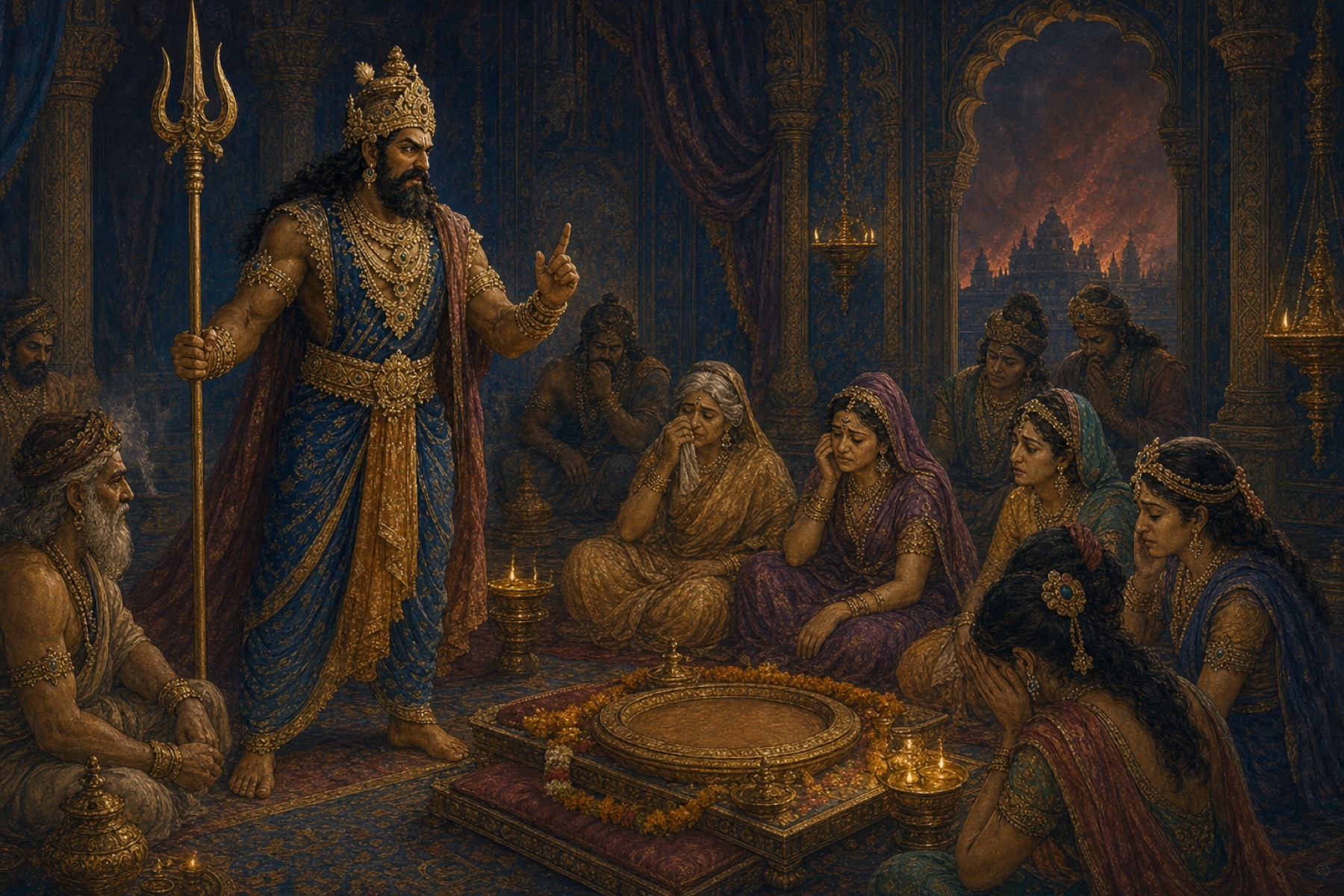
Hiranyakashipu speaks to his grieving family while holding a trident and concealing his rage
Scene 01ŚB 7.2.1–61
01

ŚB 7.2.1–61

Grief becomes a campaign for control

After Viṣṇu kills his brother Hiraṇyākṣa, Hiraṇyakaśipu turns grief into a campaign against devotional culture. Yet when he meets his grieving relatives, he explains that the soul is eternal and that bodily loss should not bewilder them.

The contradiction is deliberate: he can state real philosophy while refusing to live by it. Intelligence can explain truth and still remain governed by resentment.

Remember this frame

A ruler holds a trident while speaking a truth his anger will not let him live.
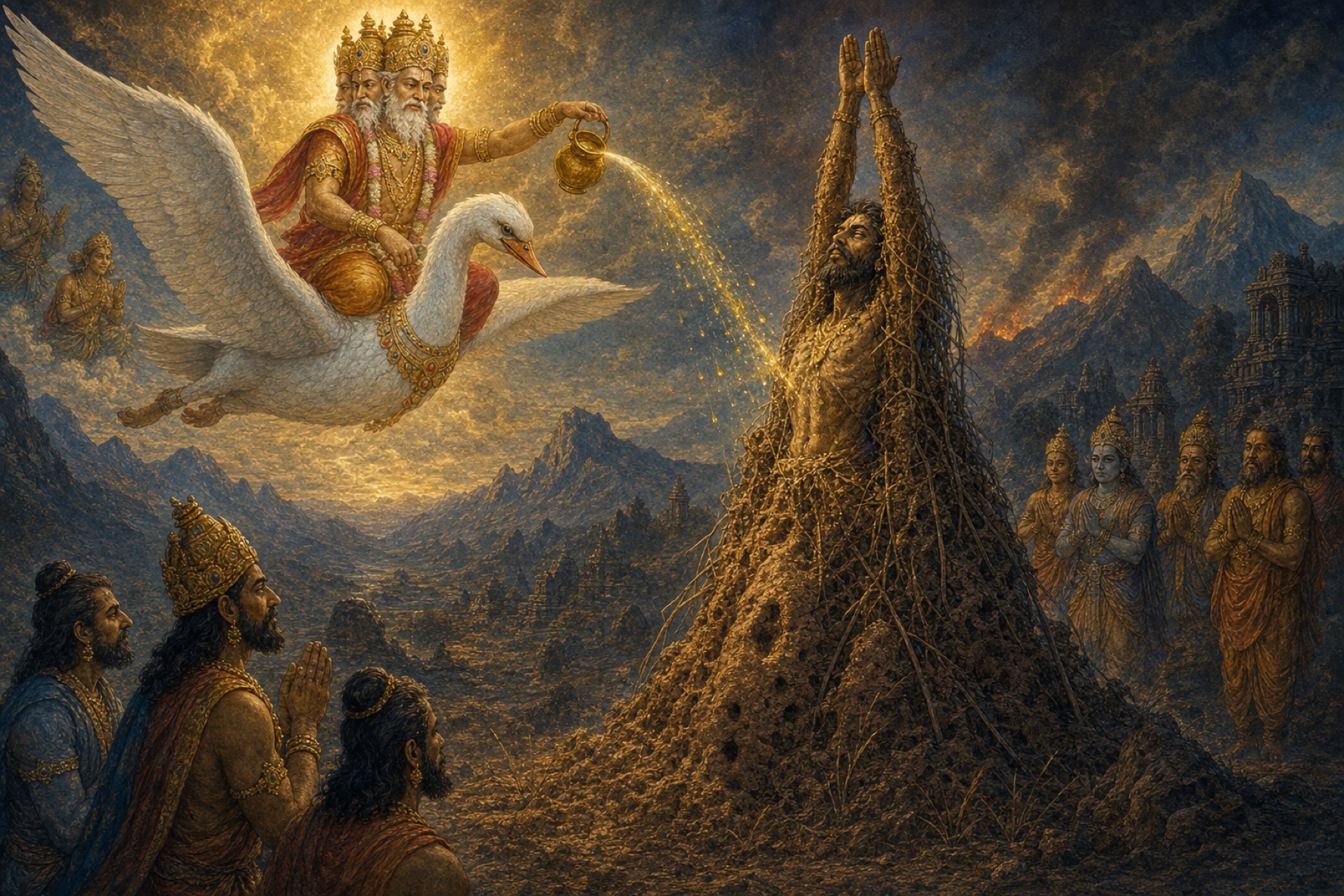
Lord Brahma restores Hiranyakashipu after his severe austerity as the demigods observe
Scene 02ŚB 7.3.1–7.4.29
02

ŚB 7.3.1–7.4.29

A fortress built against death

Hiraṇyakaśipu performs an austerity so severe that an anthill grows over his body. When Brahmā arrives, the king asks for layered protections against death—from no creature, in no ordinary place or time, by no conventional weapon.

Brahmā does not grant immortality. Hiraṇyakaśipu nevertheless conquers the worlds and occupies Indra’s palace. The more security he constructs, the more violently he must defend it.

Remember this frame

The anthill opens; a restored conqueror receives every protection except immortality.

Young Prahlada calmly explains the nine practices of devotion before his powerful father
Scene 03ŚB 7.4.30–7.5.32
03

ŚB 7.4.30–7.5.32

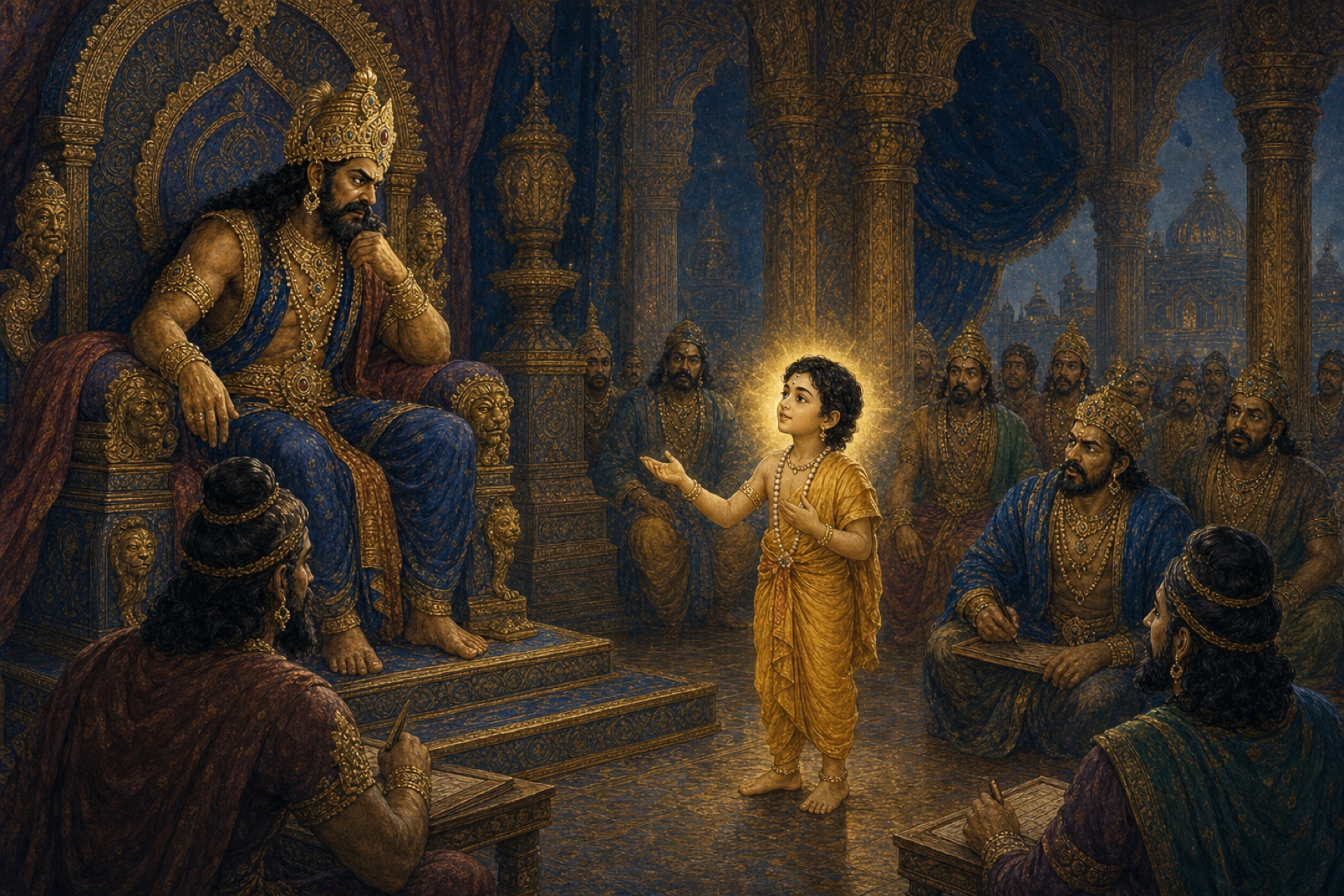
The child power cannot program

Prahlāda is sent to teachers who train princes in political control, economic gain and calculated alliances. He learns what they teach but does not absorb their friend–enemy vision. Asked by his father for the best thing he has learned, he answers with devotion to Viṣṇu.

He then names nine practices—hearing, chanting, remembering, serving, worshiping, praying, becoming the Lord’s servant and friend, and surrendering everything. His independence is not exceptional self-belief; it comes through grace and saintly instruction.

Remember this frame

A five-year-old calmly describes nine ways to love God before the emperor of the universe.

Prahlada sits absorbed in remembrance while armed servants fail to harm him
Scene 04ŚB 7.5.33–53
04

ŚB 7.5.33–53

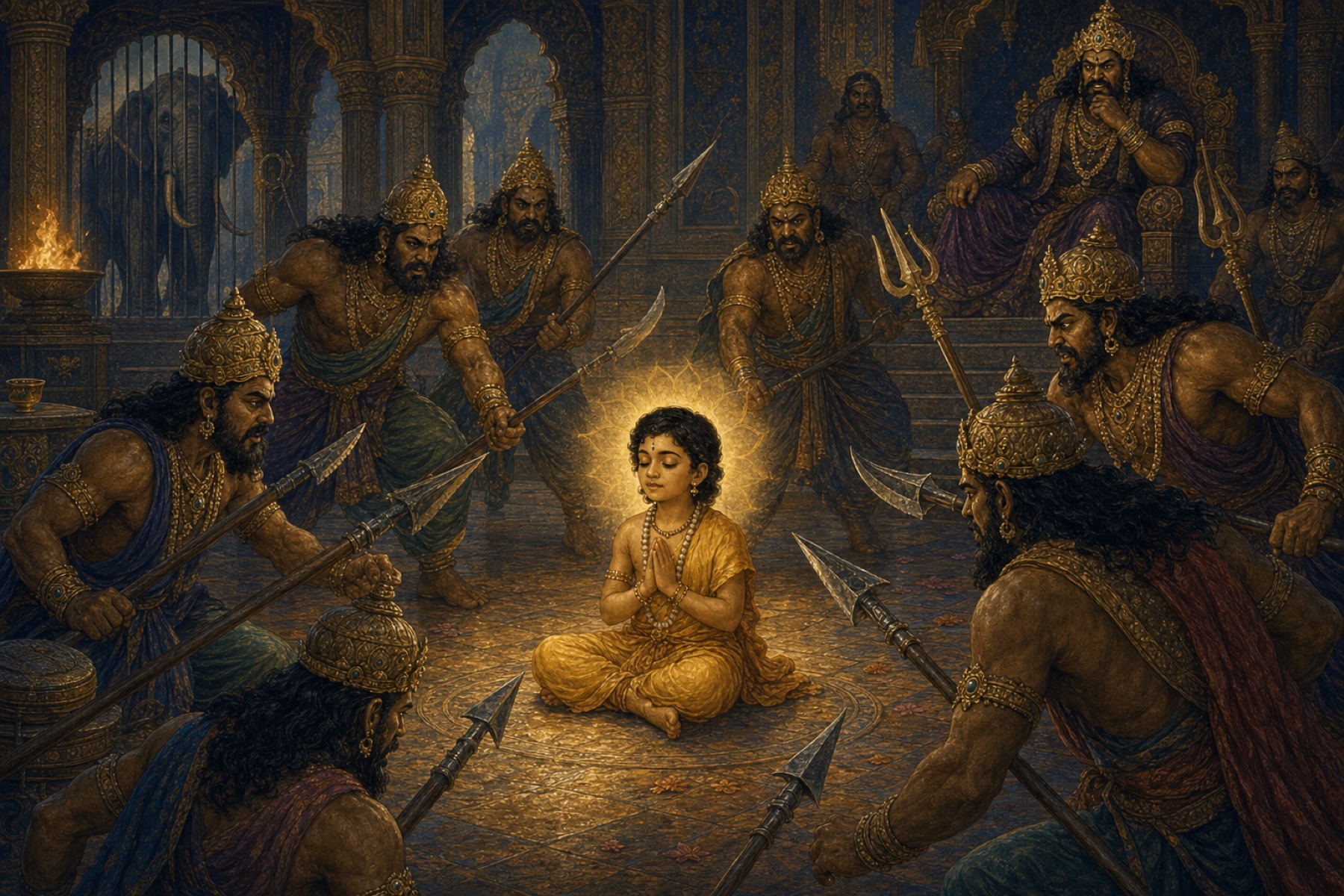
Every weapon fails

Hiraṇyakaśipu orders the child killed. Armed servants strike; further attempts involving poison, fire, crushing force and other dangers also fail. Prahlāda does not counterattack or imagine himself invulnerable—he remains absorbed in the Supreme Lord.

The emotional balance reverses. The child is peaceful; the ruler with every advantage becomes afraid. Control has reached the point where it cannot tolerate one ungoverned conscience.

Remember this frame

Raised weapons circle a child whose attention remains elsewhere.

Young Prahlada teaches his classmates about the purpose of human life during a break at school
Scene 05ŚB 7.5.54–7.6.30
05

ŚB 7.5.54–7.6.30

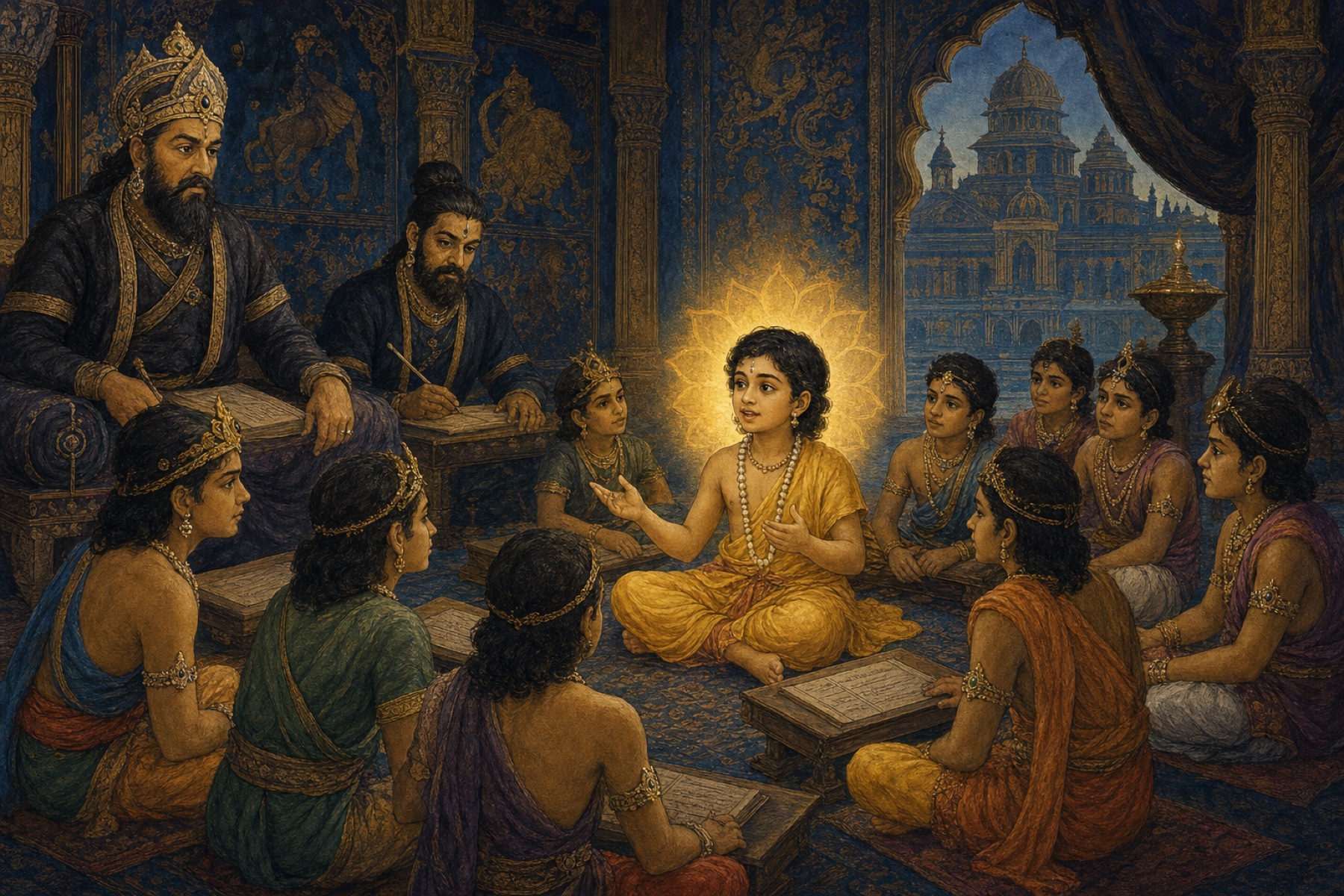
Recess becomes a spiritual classroom

When the teachers leave, Prahlāda’s classmates put aside their play. He tells them that an intelligent person should begin spiritual life now, because a human life is rare, temporary and capable of realizing an enduring relationship with the Supreme.

This is not an argument against education, work or family. It is an argument against postponing the central question until every lesser appetite is satisfied—a moment that never arrives.

Remember this frame

The toys are set aside; the children lean toward a question larger than adulthood.

Sage Narada teaches and shelters the pregnant Kayadhu in a peaceful forest hermitage
Scene 06ŚB 7.7.1–55
06

ŚB 7.7.1–55

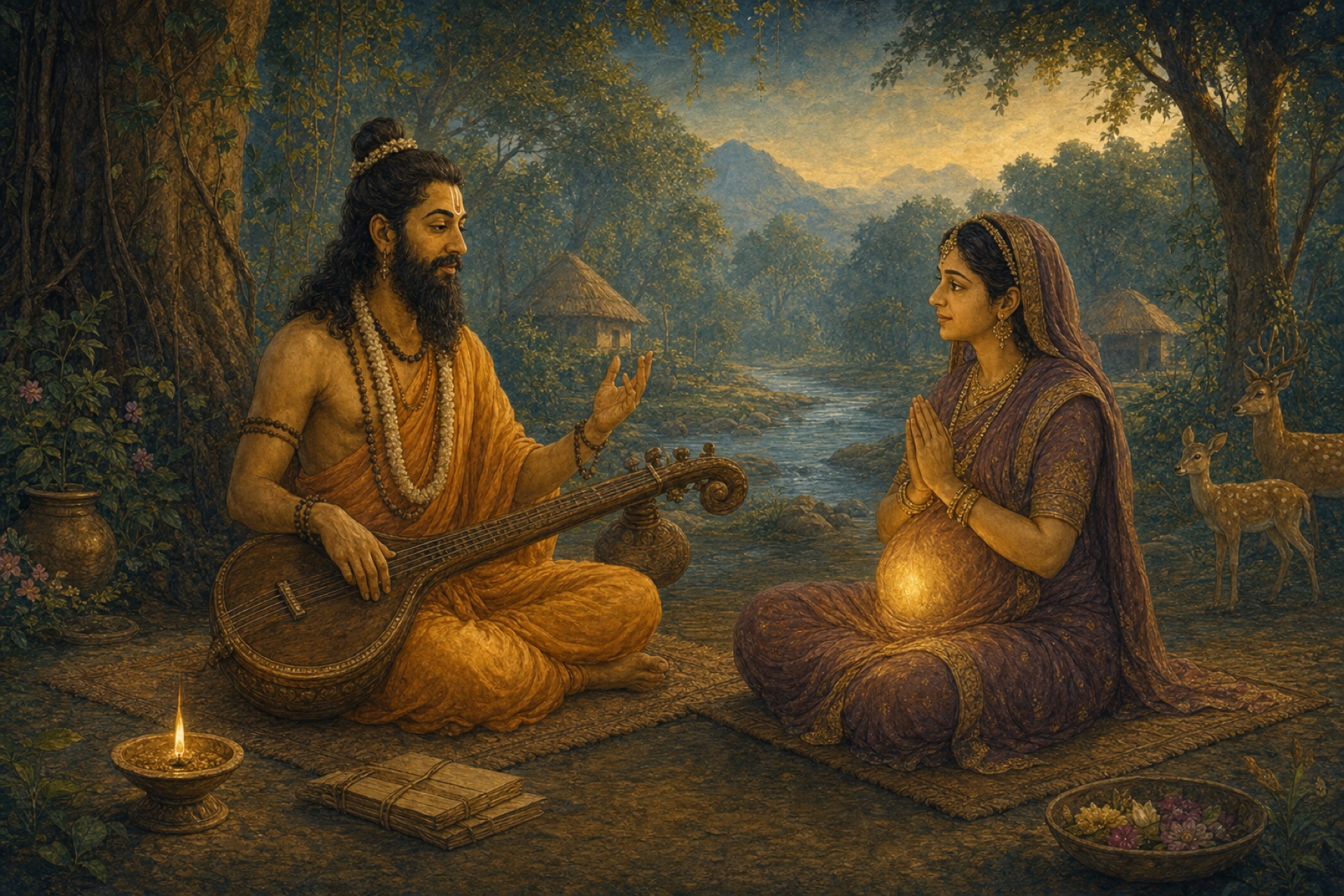
The lesson heard before birth

Prahlāda explains how his understanding began. During Hiraṇyakaśipu’s absence, Indra seized his pregnant mother, Kayādhu. Nārada stopped him, recognized the unborn child as a great devotee and sheltered Kayādhu in his hermitage.

Nārada instructed her while Prahlāda listened from within the womb. The chapter presents this as sacred history; its point is not a modern claim about fetal cognition, but that grace reaches a person before status, training or achievement can claim the credit.

Remember this frame

Nārada’s vīṇā rests beside him; a mother listens; a quiet light answers from within.

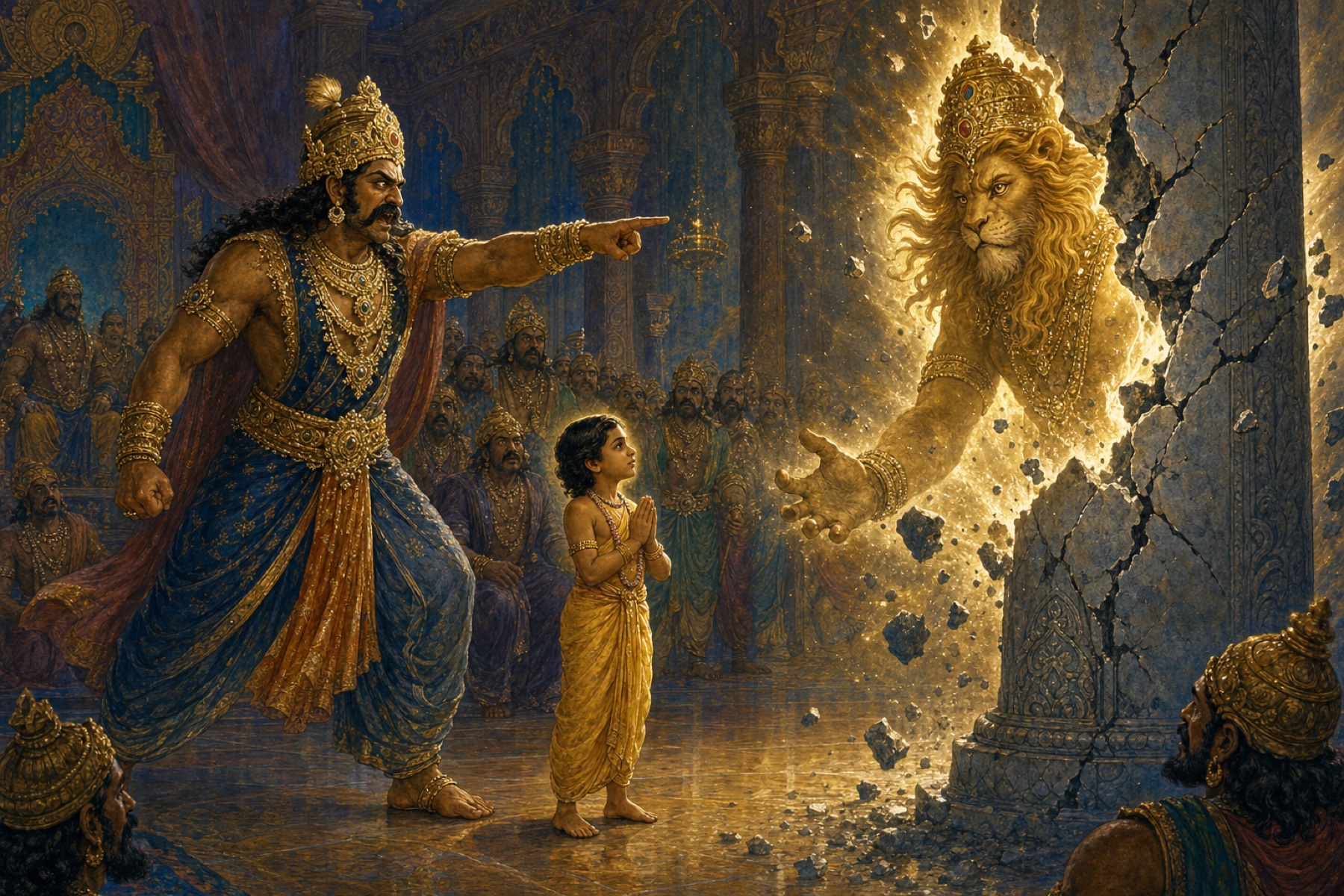
Prahlada stands fearless as Lord Nrsimhadeva begins to emerge from the pillar struck by Hiranyakashipu
Scene 07ŚB 7.8.1–56
07

ŚB 7.8.1–56

“Is He in this pillar?”

Hiraṇyakaśipu demands to know the source of Prahlāda’s strength. Prahlāda answers that the same Supreme Lord empowers everyone. Enraged, the king strikes a pillar and challenges that Lord to appear.

Nṛsiṁhadeva emerges—neither man nor lion—and defeats the tyrant at the threshold, at twilight, upon His lap and with His nails. Every apparent protection is honored; none can exclude the Supreme.

Remember this frame

A fist strikes stone; the hall shakes; the pillar answers.

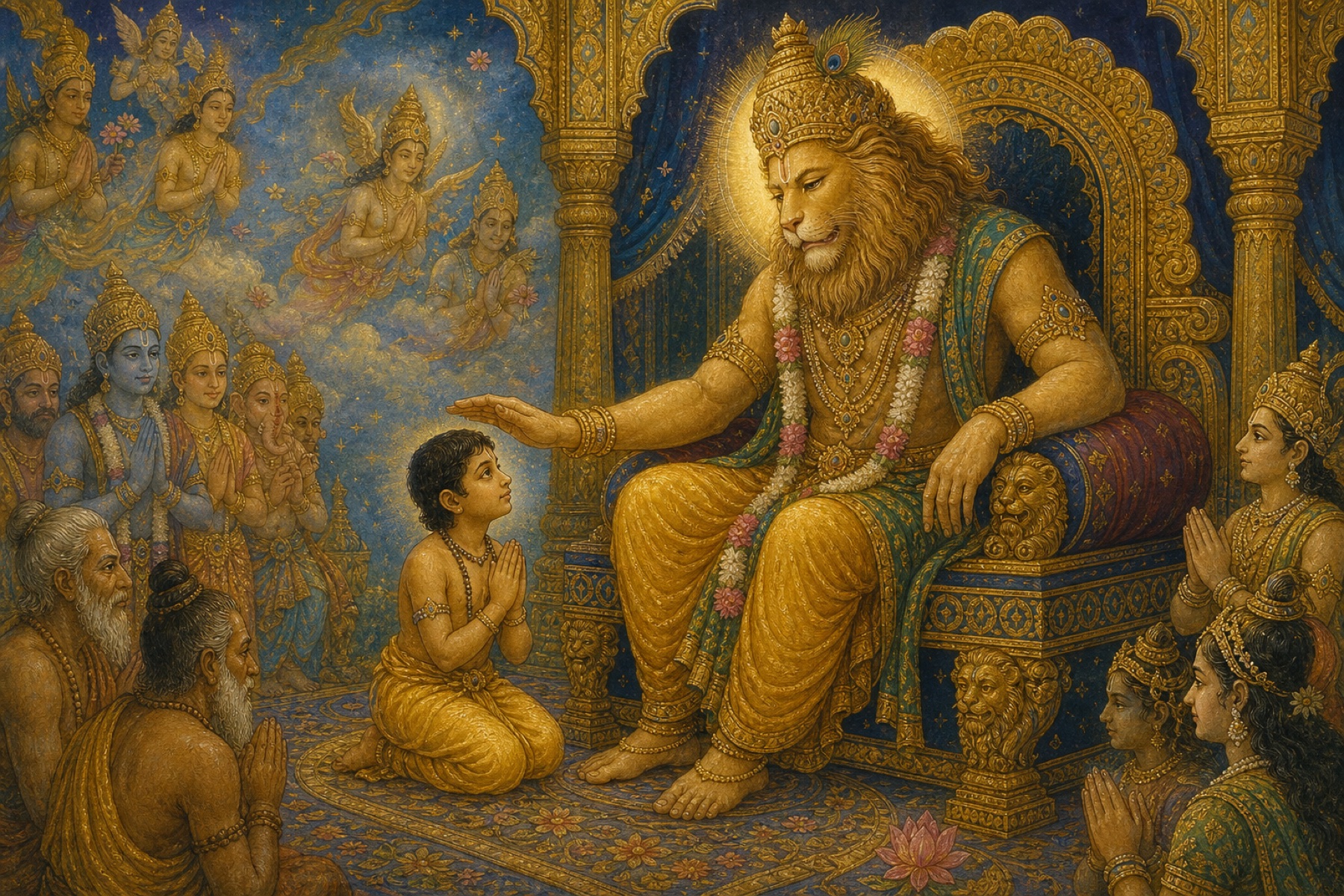
Lord Nrsimhadeva blesses Prahlada after the child asks for freedom from material desire
Scene 08ŚB 7.9.1–7.10.47
08

ŚB 7.9.1–7.10.47

The blessing he refuses

When even the celestial leaders hesitate to approach Nṛsiṁhadeva, Prahlāda comes forward. His prayers reject the idea that wealth, education, beauty, influence, strength or intelligence can by themselves satisfy the Supreme Lord.

Offered any blessing, he asks that material desire leave his heart and that his father receive mercy. He is later entrusted with the kingdom. The narration closes by attaching freedom from bondage and anxiety to hearing and chanting this complete history with attention.

Remember this frame

Offered everything, Prahlāda asks to stop wanting—and remembers the person who hurt him.

Carry the victory forward

Remember the refusal, not only the rescue.

Prahlāda survives a tyrant, but the deeper victory comes afterward: offered any material benediction, he asks that desire itself leave his heart and that his father receive mercy. Read Chapters 2–10 to meet all eight movements, the complete prayers and Śrīla Prabhupāda’s purports.